Once upon a time there was a
little girl who looked up to an unrealistic idol, Barbie. Spoiler alert: that
little girl was me. From the time I was three years old I was taught to love
Barbie. Everyone around me played with Barbie's; my sister, my cousin, my
friends all had tons of them. In actuality I never saw anything wrong with the
dolls until I read, "Our Barbie's, Ourselves." In fact, when I was
little I looked up to her. She had everything I wanted in life: lots of
talents, great careers, a beautiful house, and much more. But after I read,
"Our Barbie's, Ourselves," I began to understand all the controversy
surrounding the beloved toy. Emily Prager uses rhetoric, such as allusions and
rhetorical questions, to reveal to readers the effect that Barbie can have on
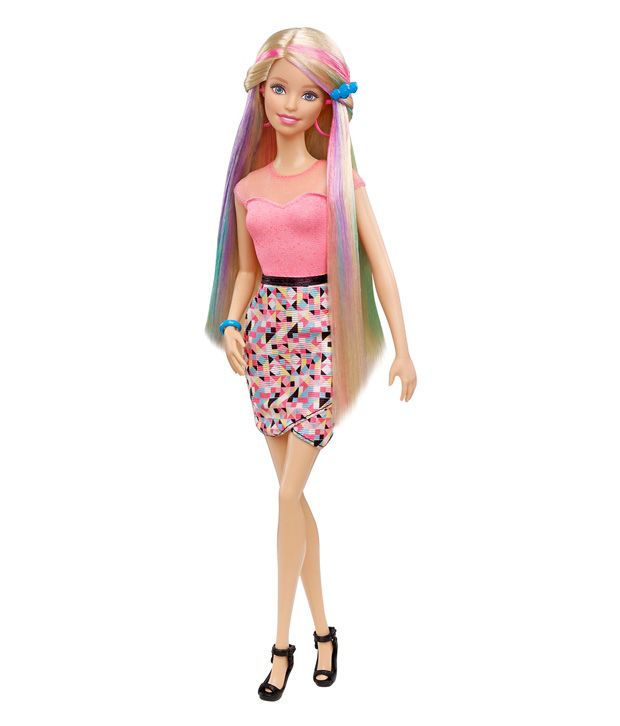
women. Girls who play with Barbie at a young age are taught that they should
look like that doll. They are taught that in order to be 'beautiful' you must
be tall, skinny, and blond, and you must have big breasts and a small waist. But,
a girl looking exactly like a Barbie is about as realistic as my friends
becoming pink elephants tomorrow. It's very unlikely- dare I say impossible.
Today there are so many different people in the world who have such different
body types and physical characteristics that the standard of perfection set by
Barbie is even more outrageous than it was when she was first created. They say
that perfection is in the eye of the beholder, but I think that no one can see
you as perfect until you truly believe yourself to be perfect. Perfection is
not only about looks but rather about who you are on the inside. Jesus Christ
once said, "If you want to be perfect, go, sell your possessions and give
to the poor and you will have treasure in heaven." In this quote, Christ
makes no reference to beauty but instead suggests that the path to perfection
involves sacrificing your wants for the sake of others. Perfection is a word
that can mean a thousand different things to a thousand different people; just
as Barbie can be considered a role model or a weapon against feminism (Prager), depending on
who you ask.